About me
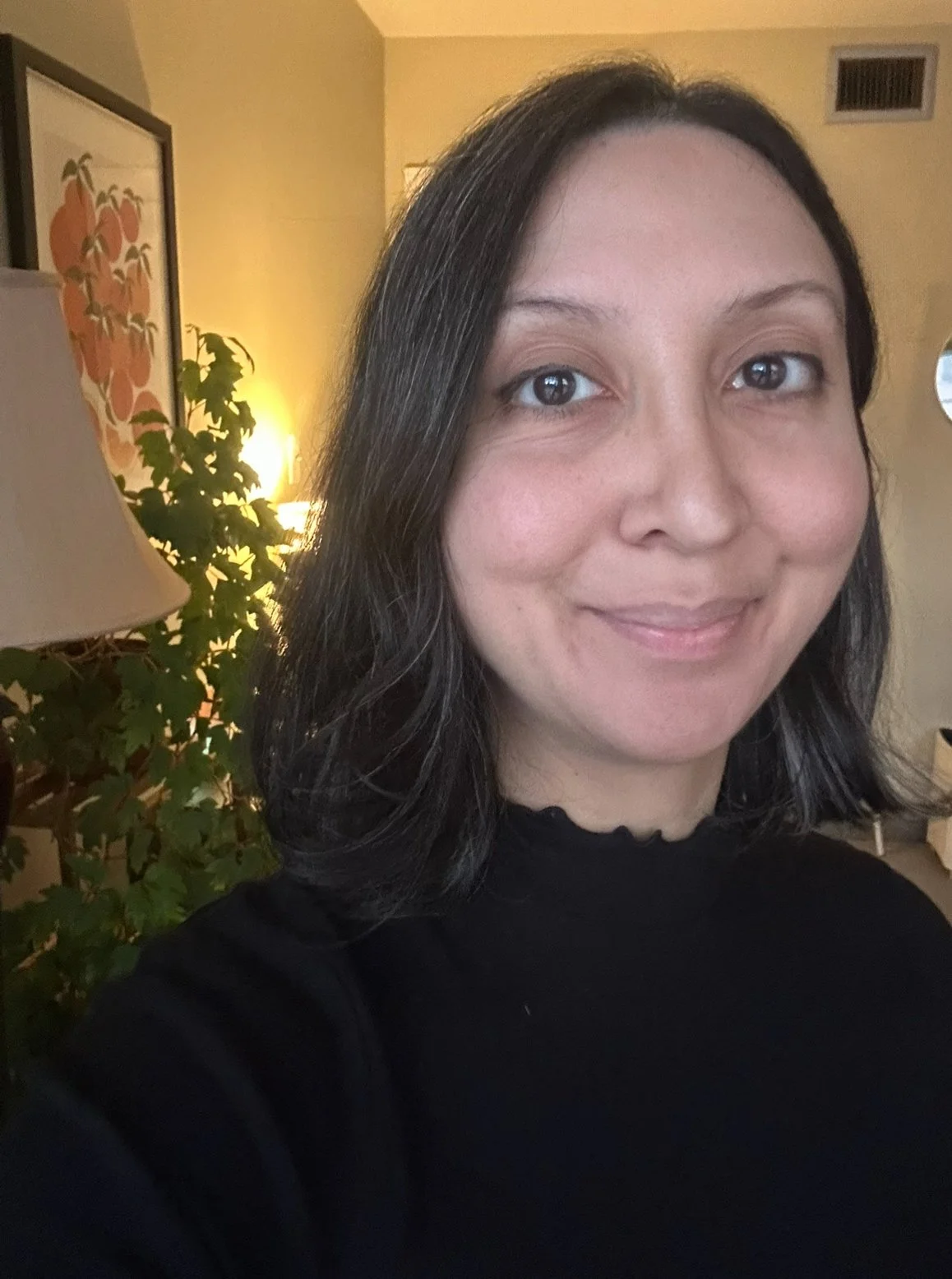
Monika Mehan, RP, she/they
Like many therapists, I first came to the mental health field as a client. My own healing path has involved reckonings with my racial identity as a mixed-race person, late-diagnosed neurodivergence, chronic illness, queerness, and life as a musician and creative, anti-capitalist human. As is the case for many of us, I spent years ignoring signs about my own capacity, and inadvertently and unknowingly harming myself while trying to succeed in a system that wasn’t made for people like me.
I now strive to take a humanity-honouring approach in both my personal life and my work - one which recognizes that we all have differing and fluctuating needs, wants, abilities, and capacities. That each of us is valid, each of us has a complex history that has shaped us, and no one is disposable. This approach, for me, is inseparable from the knowing that we all exist in the context of societal and institutional systems that shape our beliefs around who is valid, and around our relationships to each other and to ourselves. My aim is always to look at the many ways that the personal and institutional spheres weave in and out of each other continuously.
I bring my institutional learnings as well as lived experience to my work as a therapist. I am a graduate of the Toronto Institute for Relational Psychotherapy (TIRP), and a Registered Psychotherapist. My pre-therapy career experience includes language teaching and supporting newcomers to Canada. I love a good book, a great concert, and walking around the city’s neighbourhoods, especially when a bakery is involved.
My education and training certifications
Diploma - Toronto Institute of Relational Psychotherapy (2025)
Counselling Neurodivergent Clients: A Trauma-Informed Somatic Approach to Autism & ADH (Nyck Walsh)
Introduction to Working with Couples Relationally (Tamara Robert)
Introduction to the Foundations of Sex Therapy (Wilfrid Laurier)
I aim to learn continuously about new psychotherapy and healing possibilities via both formally recognized trainings and informal sources such as podcasts, books, my own lived experience, and narratives of the lived experiences of others.